
Stories of the Dog-Human Bond
April 2026 | Volume 4
The Dog Who Invented the Freudian Hour
By Jessica Robinson
Long before anyone coined the term animal-assisted therapy, a dog was quietly at work in the most famous consulting room in the world – Sigmund Freud’s.

Freud and Jofi, Freud Museum, London
Patients arriving for their sessions entered a space that has since become legend: Persian rugs layered on the floor, antiquities arranged on every surface, and Freud seated behind his psychoanalytic couch where patients were invited to recline and say whatever came to mind.
But there was another presence in the room, a watchful Chow-Chow named Jofi.
In contrast to the analyst, she offered no interpretation. Unlike the patient, she had nothing to reveal.
Freud observed the dog carefully. If Jofi settled comfortably near someone, he took note of it. If she kept her distance, allowing space, he noted that too. According to many accounts, Freud sometimes spoke on her behalf– suggesting, for example, that if she scratched to exit the room, he might tell a patient, “Jofi doesn’t approve of what you’re saying.” When she returned a moment later, he would add, “Jofi has decided to give you another chance.”
In a sense, Jofi created a second layer of observation, one attuned not to words, but to feelings.

Jofi, courtesy of the Freud Museum, London
Patients relaxed in her presence. Some absent-mindedly stroked her thick fur as they talked. Others simply appeared comforted by her steady, nonjudgmental company.
Precisely fifty minutes into the session Jofi would rise, stretch, and pad toward the door, as if to say: “Time’s up!” Freud reportedly took the hint that the session was over.
What we now call the “Freudian hour” owes as much to the dog as to the doctor. The precision of the “Freudian hour” has long been treated as clinic discipline– a boundary essential to the analytic process. But in Freud’s study, the clock may have had competition. Jofi’s timing– uncannily consistent– introduced a softer, almost theatrical cue. No abrupt glance at a watch, no polite but pointed interruption. Just a dog stretching, rising, and drifting toward the door. It’s tempting to imagine that one of psychoanalysis’s most enduring conventions began not as doctrine, but as habit– shaped by a dog who understood, perhaps better than anyone in the room, when it was time to stop talking. Nearly a century later, that instinct has become a practice.
Not only was Jofi psychoanalysis’s first unofficial timekeeper, she was also a pioneer in canine-assisted therapy.
Therapy dogs don’t just help people open up– they calm, ground, and steady them in all kinds of settings, from hospitals and schools to corporate offices, courtrooms, and community programs. That quiet shift is exactly what trained teams from the Good Dog Foundation bring into rooms across the tri-state area every day.
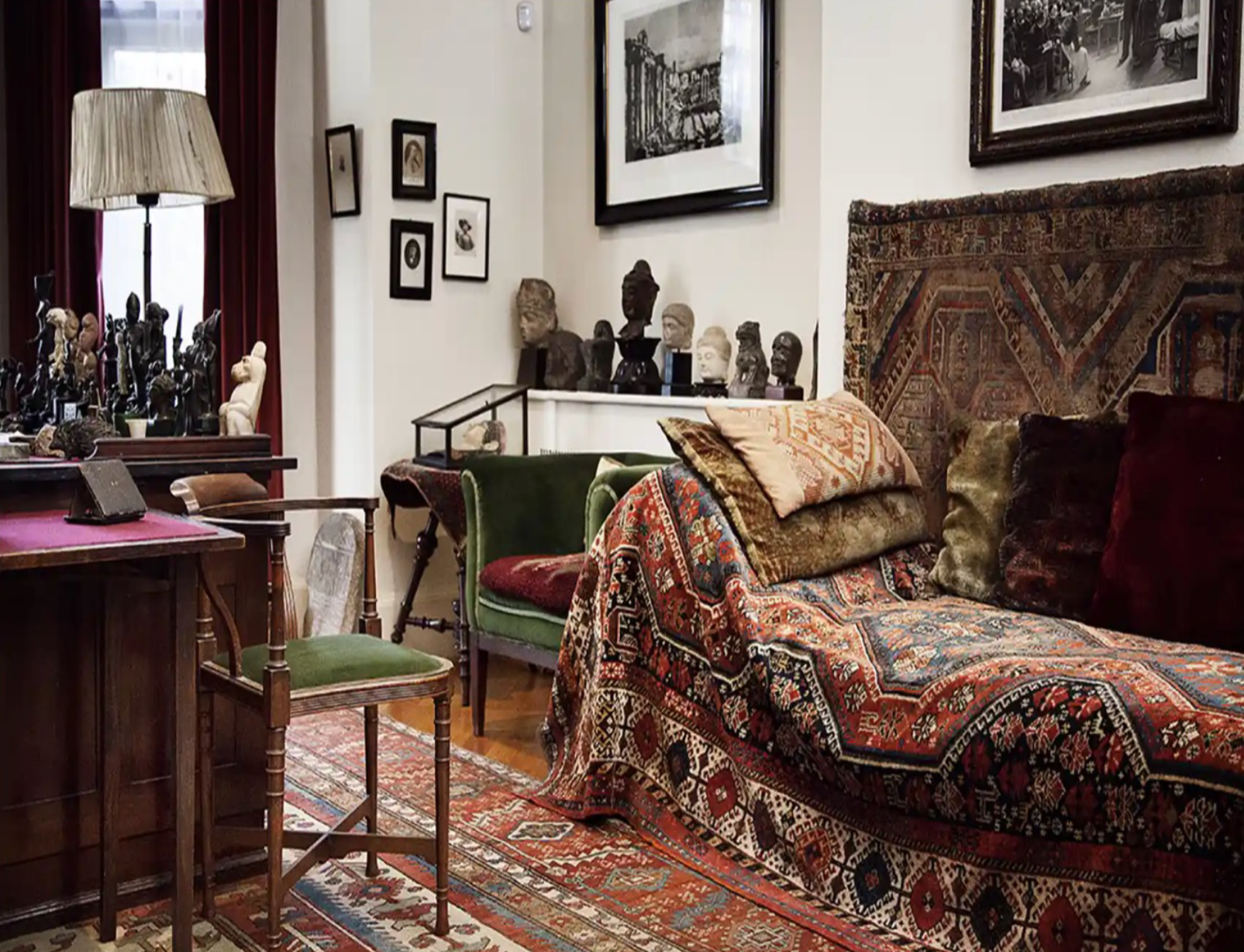
Freud's Famous Psychoanalytic Couch/Freud Museum, London
In hospitals, that might mean sitting beside a patient before a difficult procedure, offering a moment of calm in an otherwise clinical environment. In schools, it can be a child reading aloud to a dog– gaining confidence without fear of judgment. In workplaces, a brief visit can soften stress and reset the tone of the day. Even in high-pressure settings like courtrooms, the presence of a dog can help steady nerves and create a sense of emotional safety.
What once seemed anecdotal is now increasingly understood. Studies suggest that interactions with dogs can lower cortisol levels, reduce blood pressure, and increase oxytocin– the hormone associated with bonding and trust. In other words, what Freud observed in Jofi is no longer just intuition, it’s data.
The dogs themselves, of course, do not know they are participating in a therapeutic intervention. They simply do what dogs do best: they notice people. And people notice them.
Jofi never published a theory of the unconscious. She left no writings on dream analysis. But by sitting patiently in that consulting room– and by reminding Freud when the allotted time was up– she demonstrated something that modern research continues to confirm: a friendly paw at the right moment can provide an invaluable sense of comfort, joy, and companionship.
Freud spent his career interpreting what people said. Jofi paid attention to what they felt– and let them know when it was time to leave.
As for me– Henry, my Morkie, has just barked at the clock and is now standing by the door. He’s clearly been reading over my shoulder and has taken a cue from Jofi.
Message received. Time to wrap.
Stay tuned for more doggie Dispatches.
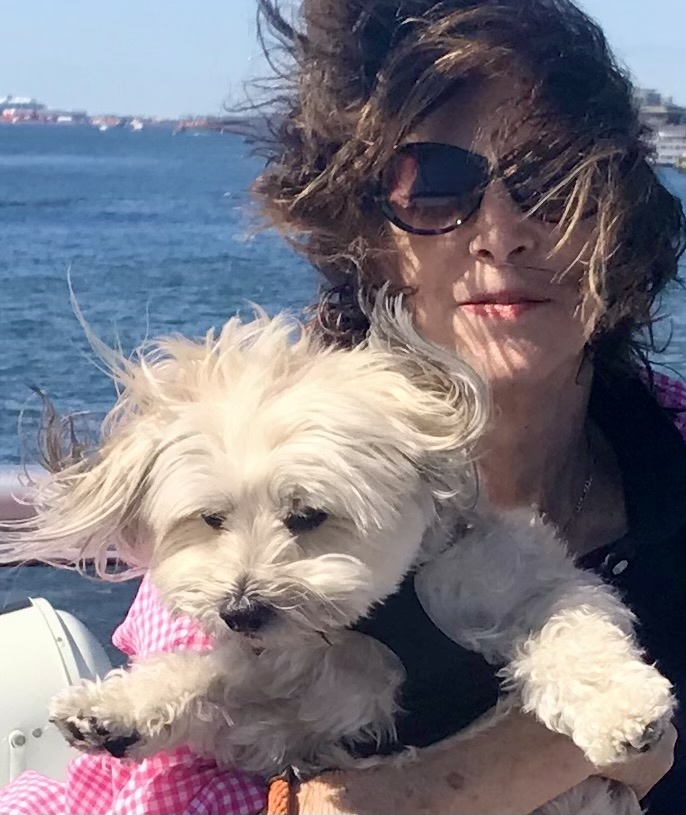
Jessica and Henry
Jessica Robinson
Jessica Robinson is producer, director, writer, and former head of Robinson Creative Services, a direct response marketing agency
PUBLISHER PROMISE
Every other month, the Good Dog Dispatch tells a story of humans and dogs joining forces to help people through rough times. Stories you'll want to share with others - every other month, or more if you'd like.Let us know. Tell us what you'd like to know.
Are you a Good Dog Dispatch Story waiting to happen?
Our 350 trained / certified dog-human teams are fanned out across the Tri-State / Greater NY Metro helping over 100,000 people a year at hospitals, schools, nursing homes, libraries, special needs facilities, and increasingly, at the workplace.
We need twice as many! It's tough times that make folks anxious. Dogs bring instant biochemical help triggering a surge of feel-good hormones. Know a loving dog with good manners? Want to make the world a better place working side-by-side with your best tail-wagging buddy?
Please apply. Our standards are high. But we'll help you meet them!